How an evening runs
One phone each, half an hour, no rehearsal
Nobody reads a script. Nobody hands out envelopes. The app carries the plot and you carry the conversation.
Tonight you are somebody else
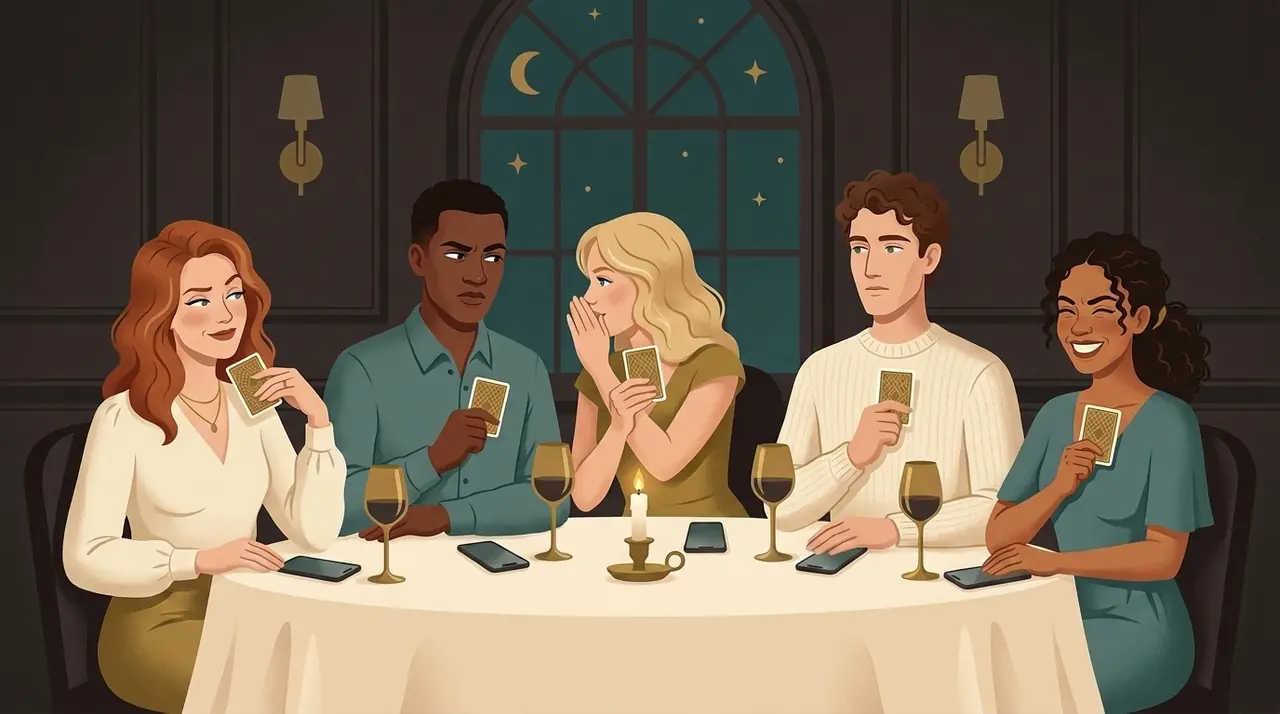
Everyone gets a character: a name, a history, and cards only you can see. The crime has already happened — and one of you did it.
Three jobs at one table
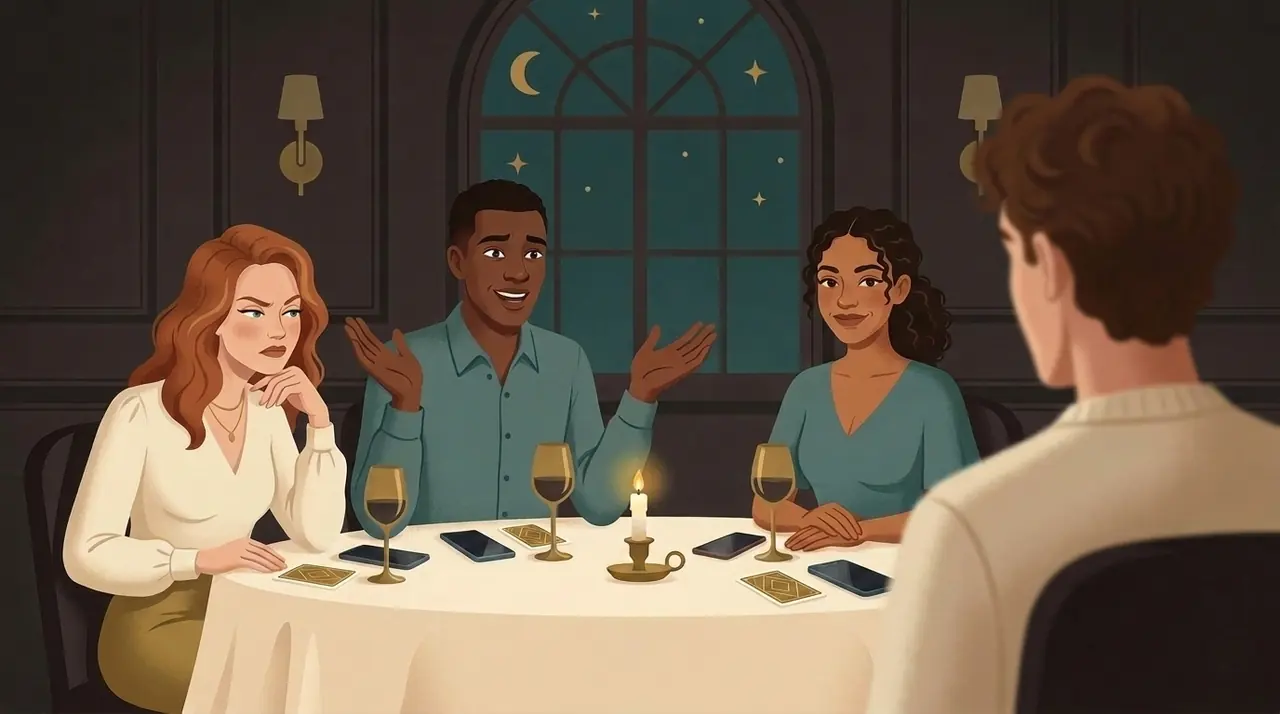
- The group — find the culprit.
- You — keep the suspicion off yourself; everyone has something to hide.
- If it was you — get to the end without being named.
Say what is on your card
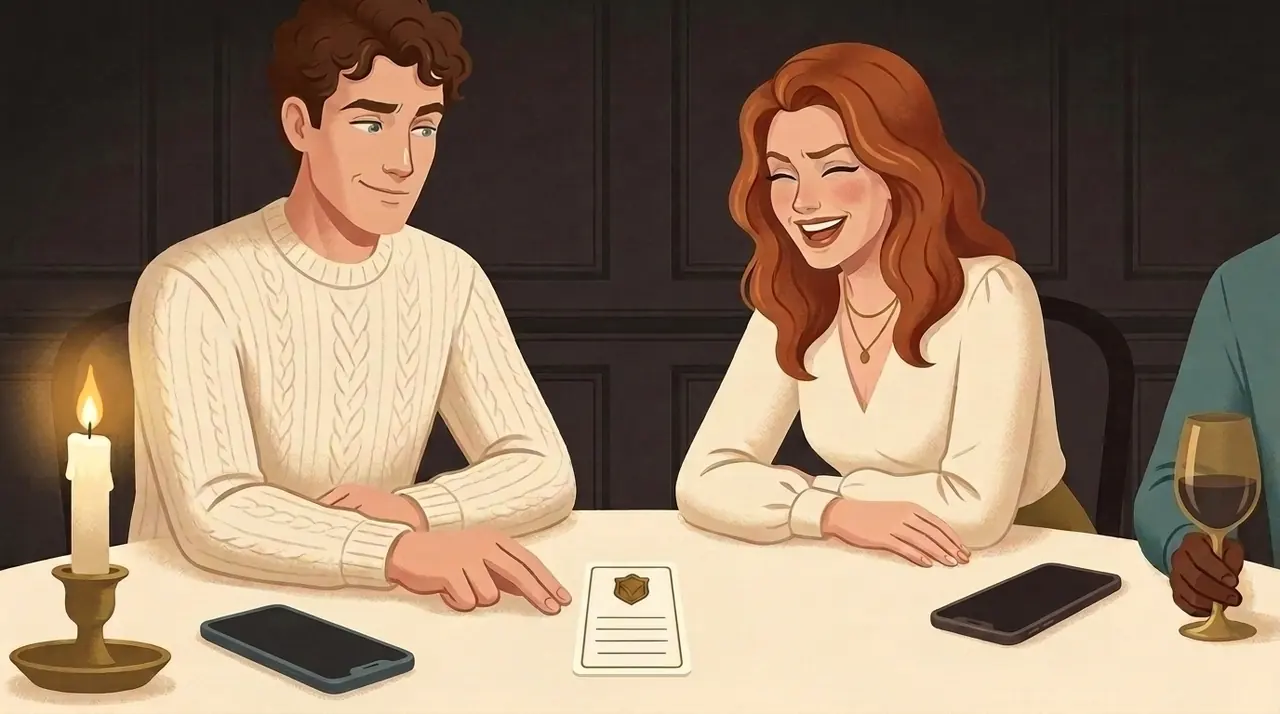
Each round opens a new one. Everything on it is true: you may hide things, you may not invent them.
Read the dossier, then accuse
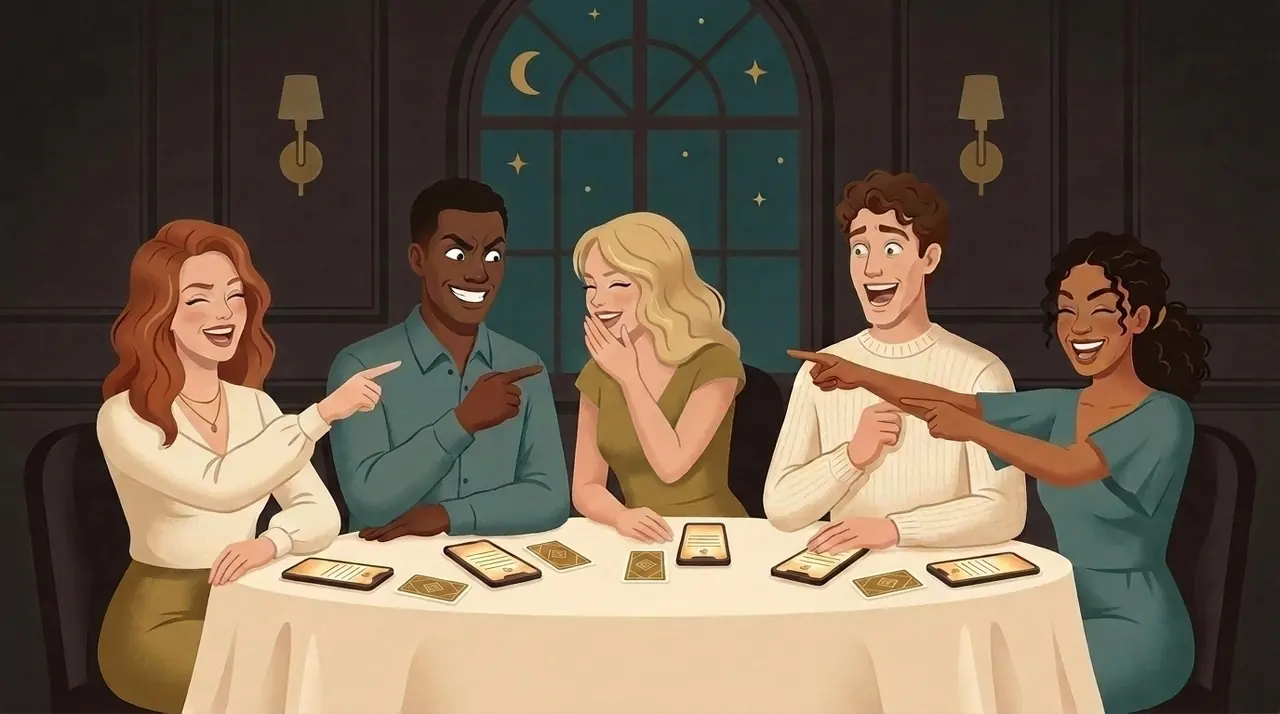
After every round one new fact lands on all the phones. It never clears anyone. After three acts you all point at once.
One of you opens the room
The host picks the case and the room shows a six-letter code and a QR. Guests point a camera at it and a page opens on their phone. There is no install, no sign-up and no name to invent — you type what your friends already call you, and after that the screens use character names anyway. At the table you accuse Lydia, not Boris.
Only the person who opens the room pays for the case. Everyone else plays free, every time — and roles are dealt blind, so nobody, including the host, knows who got what.
On a video call, paste the link into the chat instead. Do not share your own window — your cards are in it. See games to play on Zoom and games to play over FaceTime.

Inside an act
A dossier never clears anyone, so an alibi has to be argued for, not read off a screen. After the dossier the table votes on who looks worst. The vote is public, nobody leaves, and the next act starts with someone explaining themselves.
Three rounds of that, then a blind accusation and the resolution. If the table catches the culprit, everything is opened: the reasoning, the truth behind every character. If the culprit walks, the screen says only that — and names nobody. Some evenings are supposed to end in the taxi home.
The one rule everybody gets
Say the line on your card. After that, say what you like.
Staying quiet, changing the subject and refusing to answer are all fair. Claiming something that is not on your card is not. The culprit, in the cases where they know, is the single exception — which is what makes them worth catching.
Questions people actually ask
How many people do I need?
Four to six. Six is the usual table; two of the cases — The Final Edition and The Second Set — are written for exactly four, with a tighter plot to match. Fewer than four and the case stops holding together, so the app will not deal the roles.
Does everyone need to install an app?
No. One person opens a room. Everyone else scans the QR code and plays in their browser — no download, no account, no email address. That is the whole point of the join flow.
How long does an evening take?
About half an hour of game, and usually another half hour of arguing about it afterwards. Three acts of roughly three minutes each, with a dossier and a round of open suspicion between them, then the final accusation.
Can we play without a host or game master?
Yes — nobody sits out to run it. The app deals the roles, drops the dossiers and counts the votes. One person taps to move the evening on when the conversation runs dry, and that person is playing too.
Does anyone get eliminated?
No. The rounds of suspicion are public and they cost you your reputation at the table, not your seat. Someone accused early spends the next act defending themselves, which is considerably more fun than watching.
Do we need to be online?
Yes. The phones share one room through a server, so everybody needs a connection — the host and the guests both. There is no offline mode, and nothing to download in advance.
Can we play the same case twice?
No, and that is by design. Once the resolution is read, everyone knows who did it. A case is an episode rather than a board game: you play it once, with one group, and then you open another.
The fastest way to understand it is to play it
The Eclipse is free, needs four people and about half an hour, and explains itself as it goes.
Play a free caseThe Eclipse is free. No install, no sign-up.