A Halloween murder mystery party for four to six people takes about two hours. You need one costume detail per guest, food that is on the table before the first act, and a case that runs without anyone reading a script. The last one is the part most parties get wrong, so start there.
Why the host usually misses the party
The classic murder mystery kit comes as a download: character booklets to print, envelopes to stuff, a host's script to read aloud between rounds. It works, and it has a cost nobody prints on the box. The person holding the script knows the answer, so they spend the evening running the game while everyone else gets to play it.
A no-host game moves that job onto the phones. Guilty Party deals each guest a character and their private cards, drops a dossier for the whole table between acts, and counts the votes. One person taps to move the evening on when the talk runs dry, and that person is a suspect like everyone else.
So the plan below has no rehearsal in it. You can decide on the 29th and play on the 31st.
The two-hour plan
- 0:00, arrivals. Drinks, coats, and the one costume detail each guest was asked to bring. Nobody knows their character yet, so nobody has to stay in character yet.
- 0:20, eat while it is loud. Everything goes on the table at once. The first act is about to start, and nobody wants to be in the kitchen when it does.
- 0:30, open the room. The host opens the case on their phone. Everyone else scans the QR code and plays in the browser, with nothing to install and no account to make. Read the setup together, and the phones deal the characters.
- 0:35, three acts. Each act opens a new card on every phone. Say the line on your card. After that, say what you like. When the act is done, a dossier lands for the whole table and everyone votes in the open on who looks guilty. Nobody is knocked out, but whoever the table names starts the next act explaining themselves.
- 1:05, the accusation. Everyone accuses in secret, on their own phone. Then the resolution: the culprit is caught, or is still sitting at your table.
- 1:15, the argument. This is the part people repeat on the way home. Give it the whole half hour it wants.
- 1:45, dessert or a second case. A group that liked the first case usually asks for another, so have it picked before anyone asks.
The game itself is the half hour between 0:35 and 1:05. Everything around it is yours to stretch or cut. If guests arrive late, start the room at 0:45 and nothing breaks.
One costume detail, and dress for the year
The rule that saves the evening for the guest who hates costumes: one detail each, nothing more. A tie clip counts.
Characters are dealt at the table, so nobody can dress as their role in advance. Dress for the year the case is set in. For a 1938 case that means braces or a bow tie, a string of pearls, red lipstick, a folded evening paper, or a fedora left on through dinner. One of those per guest and the room already looks like somewhere else.
If your group goes all in anyway, let them. Costumes change nothing in the game, and the guest in a full tuxedo will be accused first for no good reason.
Food that does not need you
The host plays, so nothing on the menu can need them mid-act. Anything that wants stirring or an oven timer turns the host into a caterer at the exact moment the dossier drops.
Put it all out at 0:20 and leave it:
- A pot of chili or soup on the lowest setting, with bowls and a ladle next to it.
- A board of cheese, cured meat and bread, cut before anyone arrives.
- Deviled eggs made that morning, dusted with smoked paprika.
- Something black on a plate: blackberries, black tortilla chips, a slab of dark chocolate.
- One punch bowl or one pitcher of Manhattans, so nobody spends the evening as the bartender.
Finger food wins. Phones sit on the table and get picked up every few minutes, and nobody wants to hand one across with barbecue sauce on it. For a sit-down version with a proper menu, the murder mystery dinner party guide has a running order built around courses.
Which case fits Halloween
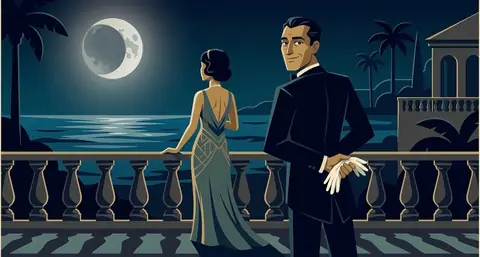
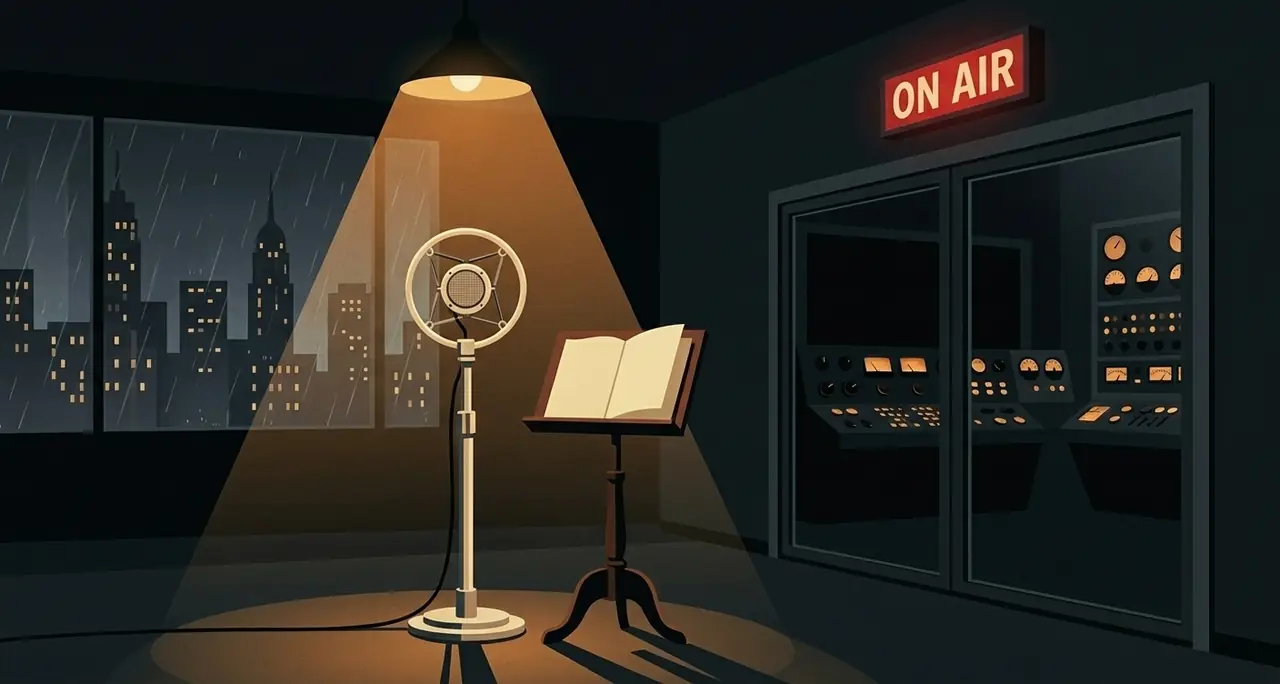
Dead Air is the obvious pick, because it happens the night before Halloween. New York, Sunday, October 30, 1938: on CBS, Orson Welles's Mercury Theatre is broadcasting a Martian invasion, and on the twenty-first floor of the Hanover Building, station WKLN goes off the air for ninety seconds. At 21:25 the night man finds Elmore Kane, who came up from the network that evening, at the foot of the transmitter. The elevator boy swears nobody came up or went down all night, and every police car in the city is out chasing Martians. The six people who were on that floor have until eight in the morning. Dead Air is $4.99, paid once and kept, and only the host pays.
The Ninth Season is for a group that came for tombs. A dig house in the Theban hills in February 1936, the ninth season of an expedition that has found nothing worth its money, and then a queen's diadem turns up in a sealed deposit. Two days later the professor lies at the foot of the shaft and the diadem is gone from the finds tent. It gives you the mummy-movie mood with nobody wrapped in bandages.
The Winter Ascent is the ghost-story choice. A grand hotel below an Alpine peak in January 1899, gaslight and snow, and a climber found in his chair by a cold fire on the morning of his climb. The snow has shut the pass, so nobody from the valley is coming to settle it.
The Eclipse is free, and it is the one to play first if your group has never done this. A villa on the Riviera in 1928, a lunar eclipse, and four minutes of darkness after which a famous diamond turns out to be glass. It opens in the browser straight away. Play it one evening this month, and on the 31st nobody needs the rules explained.
Seven guests, or eight
Every case seats four to six people, and two of them, The Final Edition and The Second Set, are written for exactly four.
With seven, put two guests on one seat: one phone, one character, two people conferring over every card. It suits a couple, or the guest who would rather whisper than perform, and it keeps everyone in the game. Don't make the seventh person a spectator. Watching this game is much less fun than playing it.
With eight, run two tables of four with two different cases and compare verdicts over dessert. One of the tables can play The Eclipse for free.
With ten or more, pick a different format. This one is written for a small table where everyone talks at once. A big crowd is better served by a hosted kit with a script and a person who is happy to run it.
If some guests are far away
The same case works over a video call, because each person's secret lives on their own phone rather than on a shared board. Guests on the call join by link instead of scanning the code. The video call guide covers the setup, including what to do when half the table is in one room and half is on a screen.